
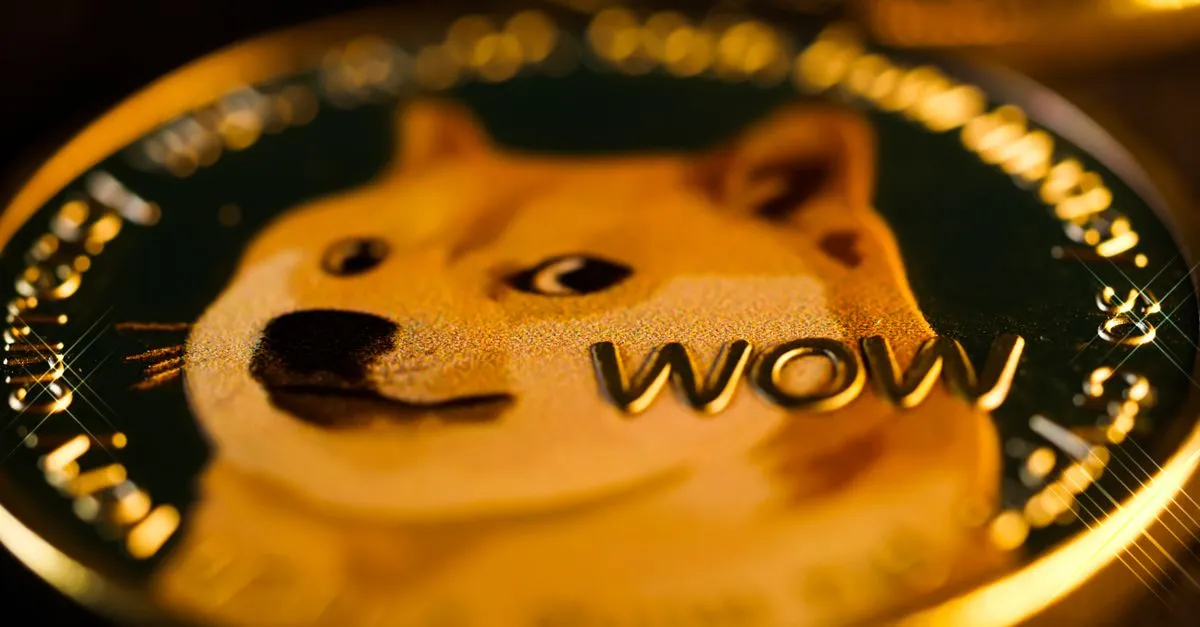
Dogecoin Whale Activity Spikes as DOGE Transfer Volume Jumps
Dogecoin Whale Activity Spikes as Transfer Volume Jumps
Dogecoin is back in the spotlight. Over the past several sessions, on-chain data has revealed a sharp increase in large-holder activity, with the number and aggregate value of high-value DOGE transfers climbing well above their recent averages. The surge in whale activity has coincided with a noticeable jump in overall network transfer volume, prompting traders to ask whether the original memecoin is gearing up for another volatile move.
For freelancers, online earners, and active crypto traders who hold or accept DOGE as payment, the development is worth watching closely — not because whale movements are a guaranteed predictor of price, but because they often signal shifts in liquidity, sentiment, and short-term market structure.
What the On-Chain Data Shows
Blockchain trackers have flagged a meaningful uptick in transactions exceeding the threshold typically used to define a "whale" transfer. These large movements appear across both exchange-related addresses and self-custody wallets, suggesting a mix of profit-taking, repositioning, and accumulation rather than a single, one-directional theme.
At the same time, total DOGE transfer volume has risen sharply. Higher transfer volume usually reflects increased network engagement — more users moving coins between wallets, exchanges, and payment services. When that rise is accompanied by whale-sized transactions, it often indicates that larger players are actively managing positions rather than simply holding.
Key Observations
- Larger average transaction size: The mean value per transfer has trended upward, a sign that big wallets are more active than retail-sized holders.
- Exchange inflows and outflows both elevated: Coins are moving toward trading platforms and back out again, a pattern often associated with active trading rather than passive storage.
- Network activity broadens: Transfer volume increases are not confined to a handful of addresses, suggesting wider participation.
Why Whale Activity Matters for DOGE
Dogecoin's market is famously sentiment-driven, and large holders can influence short-term price action through sheer order size. A spike in whale transfers can precede several outcomes: accumulation ahead of a rally, distribution into strength, or simple wallet housekeeping by exchanges and custodians.
That ambiguity is precisely why traders should treat whale alerts as context, not confirmation. A single large transfer may be an internal reshuffle at a trading platform; a sustained cluster of large transfers, paired with rising volume and price movement, carries more weight.
Context: A Broader Market Backdrop
The activity arrives against a mixed backdrop for digital assets. Bitcoin and Ethereum continue to anchor overall market direction, while alternative networks such as Solana, TON, and BNB Chain compete for liquidity and developer attention. In this environment, memecoins like DOGE and SHIB often see amplified volatility when large holders move, because thinner order books and sentiment-heavy positioning magnify price swings.
Stablecoin rails remain the connective tissue of this activity. Traders frequently rotate between DOGE and stable assets such as USDT on TRC20, ERC20, BEP20, SOL, TON, or Polygon, and USDC, using them to lock in gains or stage new entries. Understanding how these rails interact with volatile assets is a core skill for anyone earning or trading online.
Practical Takeaways for Traders and Exchange Users
Whale-driven volatility creates opportunity and risk in equal measure. Consider the following approach:
- Watch volume, not just price: Rising transfer volume with rising price can confirm genuine interest; rising volume with flat price may signal distribution.
- Use staged entries and exits: Scaling into and out of positions reduces the impact of sudden whale-driven swings.
- Keep stablecoin dry powder ready: Holding USDT or USDC on a preferred rail lets you act quickly when volatility creates favorable entries.
- Manage withdrawals deliberately: During high-activity periods, confirm network selection (TRC20, ERC20, BEP20, SOL, TON, Polygon) before sending DOGE or stablecoins to avoid costly mistakes.
- Diversify payment options: If you accept crypto for freelance work, consider supporting DOGE alongside BTC, ETH, LTC, SOL, BNB, TON, TRX, and stablecoins to match client preferences.
Security Reminders When Activity Spikes
Periods of heightened market activity are also peak season for scams. Phishing links, fake airdrops, and impersonation attempts tend to rise alongside news cycles. Always verify wallet addresses, enable two-factor authentication, and treat unsolicited "whale alert" messages on social platforms with skepticism. Self-custody users should double-check contract approvals regularly, while exchange users should confirm that deposit and withdrawal networks match precisely.
Outlook
Whether the current whale activity marks the start of a sustained trend or a brief bout of repositioning remains to be seen. What is clear is that DOGE's network is more engaged than it was just weeks ago, and transfer volume is a metric worth monitoring alongside price charts.
For traders and online earners alike, the playbook stays consistent: stay informed, size positions responsibly, keep stablecoin rails ready for rapid rotation, and prioritize wallet security. In a market where large holders can move sentiment in hours, preparation — not prediction — remains the most reliable edge.




