
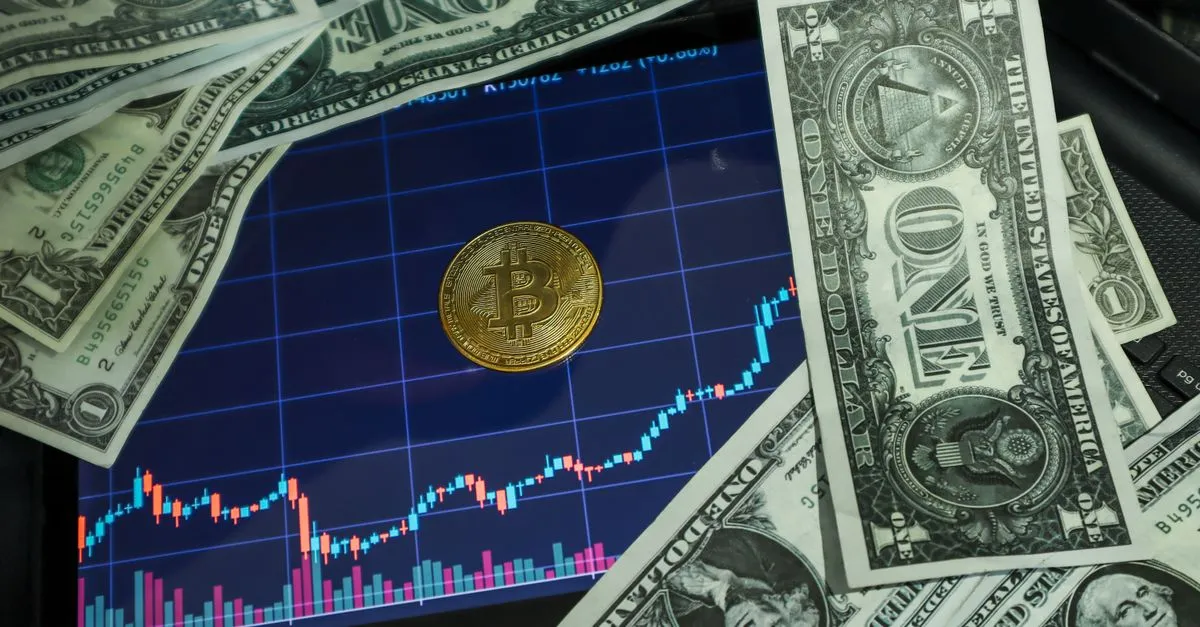
Bitcoin to Dollar Forecast: BTC Price Outlook for Traders
The Mechanics of Bitcoin Price Discovery
The bitcoin to dollar exchange rate is one of the most closely watched figures in global finance. For freelancers receiving crypto payments, online earners converting digital assets into fiat, and active traders positioning for the next move, understanding what drives the BTC/USD forecast is essential. Unlike a fixed exchange rate, bitcoin's price emerges from continuous price discovery across spot markets, derivatives venues, and over-the-counter desks worldwide. Each listed quote represents the consensus of buyers and sellers at any given second.
This volatility is not a flaw. It reflects a market that never closes, absorbs news in real time, and prices in sentiment faster than nearly any traditional asset class. Because of that, any serious forecast must combine technical analysis with an understanding of the underlying demand drivers.
What Drives the Bitcoin to Dollar Exchange Rate
Forecasting bitcoin requires tracking several forces that interact continuously. The most significant include:
- Macro liquidity conditions: Bitcoin is highly sensitive to interest rate expectations and global money supply. Periods of loose monetary policy historically coincide with strong upward pressure on BTC.
- Institutional flows: Spot exchange-traded products, corporate treasury allocations, and fund flows have turned bitcoin into an asset with structural buy-side demand.
- Supply mechanics: The fixed issuance schedule and periodic halvings reduce new supply, a dynamic that has historically preceded major cyclical rallies.
- Market sentiment and leverage: Funding rates and open interest in perpetual futures can amplify both rallies and corrections.
- Regulatory clarity: Clearer frameworks tend to reduce risk premiums and attract capital; uncertainty does the opposite.
On-Chain Signals Worth Monitoring
Long-term holders, exchange balances, and miner behavior provide valuable context. When coins move off exchanges, it often signals accumulation; when large inflows to trading venues spike, it can hint at distribution. Combining these metrics with price action gives a more grounded forecast than chart reading alone.
Technical Levels and Timeframes
Short-term forecasts rely on support and resistance zones, moving averages, and volume profiles. Medium-term outlooks lean on weekly trend structure and the behavior of the 200-day moving average. Long-term projections are better anchored to adoption cycles and network growth. Aligning your timeframe with your activity—day trading, invoicing, or treasury planning—prevents costly mismatches.
Building a Realistic BTC/USD Forecast
A responsible forecast avoids single-number predictions. Instead, treat it as a probability-weighted range. Analysts commonly present scenarios: a bullish case driven by continued institutional adoption and liquidity expansion, a base case of range-bound consolidation, and a bearish case tied to tightening conditions or risk-off sentiment.
For freelancers and online earners, this framing is practical. If you receive income in bitcoin and need to cover expenses in dollars, converting in tranches rather than holding for a perfect top reduces timing risk. For traders, scenario mapping clarifies where to place stops and when to scale into positions.
Common Forecasting Mistakes
Overconfidence in any single model, ignoring leverage positioning, and extrapolating recent momentum indefinitely are frequent errors. Bitcoin has repeatedly delivered sharp reversals precisely when consensus becomes one-sided. Diversification across assets and disciplined risk sizing remain the strongest defenses.
Practical Strategies for Converting BTC to USD
Whether you are cashing out earnings or rotating between assets, execution quality matters as much as forecast accuracy. Consider these approaches:
- Dollar-cost averaging: Convert fixed amounts on a schedule to smooth out volatility.
- Tiered exits: Set multiple conversion levels above your entry to lock in gains progressively.
- Stablecoin bridging: Moving BTC into USDC or USDT (available across TRC20, ERC20, BEP20, SOL, TON, and Polygon networks) lets you step out of volatility while staying within the crypto ecosystem.
- Flexible rails: Use platforms offering multiple settlement paths—including Skrill, Payeer, Perfect Money, PayPal, Neteller, WebMoney, Volet/Advcash, RedotPay, Nagad, Rocket, Local Pay, and Nexus Pay—alongside support for BTC, ETH, LTC, SOL, BNB, DOGE, TON, TRX, and USDC, so you are never locked into a single corridor.
The Outlook: Discipline Over Prediction
The bitcoin to dollar exchange rate forecast will always carry uncertainty, but the tools for managing it are well established. Watch liquidity, flows, and sentiment; size positions responsibly; and execute conversions through reliable infrastructure. Trade and convert with confidence on a platform built for global users.




